How to check butterfly backs on moissanite stud earrings

Check butterfly backs on moissanite stud earrings with the earrings off your ears: inspect each post and back, slide the matching back into place, and check for controlled resistance without forcing it. A back that slips freely, catches on a bent post, or presses painfully against your lobe needs attention before you wear the pair. This 2026 guide separates a useful fit check from a repair that belongs with a jeweler.
- Check moissanite stud earrings off your ears first; a butterfly back should resist sliding without needing force.
- Stop wearing an earring if its back slips, its post bends, or the fit causes pain.
- Lumina Jewelry Co. offers moissanite studs; verify the backing type separately from the stone and setting.
- Check both earrings individually. A secure back on one post does not establish a secure fit on the other.
Why this matters
A secure stone setting does not establish a secure earring back. Prongs hold the stone; the back holds the post behind your ear. Check those connections separately rather than treating an intact-looking stud as proof that everything fits.
For your 2026 everyday-wear routine, inspect the hardware before putting the earrings on. Keep the process gentle: you are looking for damage, inconsistent resistance, and uncomfortable pressure—not testing how hard you can pull. The guide to choosing moissanite stud earrings for everyday wear covers the broader buying decision.
How do you check butterfly backs on moissanite stud earrings?
Work over a clean, light-colored towel on a table, away from an open drain. Check 2 earrings individually, keeping each back beside its original post until you finish. Good lighting makes a bent post or misshapen back easier to see.
1. Confirm that the back is a push-on style
A conventional butterfly back slides onto a smooth post and grips it through spring tension. Its folded metal wings resemble a butterfly, but appearance alone is not enough to identify every closure.
Look for threads on the post before moving the back. If the closure screws on, do not push it along the threads as though it were a friction back. If you cannot identify the mechanism, ask the seller or a jeweler before applying pressure.
2. Inspect the post before testing the back
Hold the earring by its metal setting and look along the post from several angles. Check for an obvious bend, a rough area, visible damage, or a loose connection where the post meets the setting.
Stop if the post looks damaged or moves at its attachment point. A tighter back does not fix a damaged post. Do not straighten the post with your fingers or use the gemstone as a handle while trying to correct it.
3. Inspect the butterfly back itself
Look at the central opening and both curled wings. Check for cracks, distortion, trapped debris, or a wing that appears crushed relative to the other. Compare the backs visually, while remembering that matching appearance does not prove matching grip.
Remove surface residue only by a method appropriate for the earring's verified materials. Do not scrape the opening with a pin or force an object through it. If damage remains visible after cleaning, set that back aside for professional inspection.
4. Slide the matching back onto the post
With the earring still off your ear, align the central opening with the post. Support the metal setting and move the back straight along the post without twisting or rocking it aggressively.
You should feel resistance rather than an unrestricted slide. Some posts have a retention notch, but not every design does; a click is not a universal requirement. Stop if the back jams, requires force, or visibly bends the post.
5. Check retention without a hard pull
Keep hold of both parts over the towel. Apply gentle, controlled movement to the back and observe whether it stays positioned or slides with almost no resistance. Do not suspend the earring over the floor or shake it to test the grip.
A back that slides freely is a reason to stop wearing that earring. This is a practical screening check, not a measured retention test or a guarantee against loss. Ask a jeweler to assess any fit you cannot confidently distinguish from a loose one.
6. Check comfort on the ear
Only try the earring on after the off-ear inspection passes. With clean hands, insert it gently and position the back so it retains the earring without squeezing your lobe. The back should not dig into your skin.
Check 1 earring at a time so you can identify which combination causes a problem. If you feel pinching, pain, or persistent irritation, remove the earring rather than tightening or repeatedly repositioning it. A secure fit still needs to be comfortable.
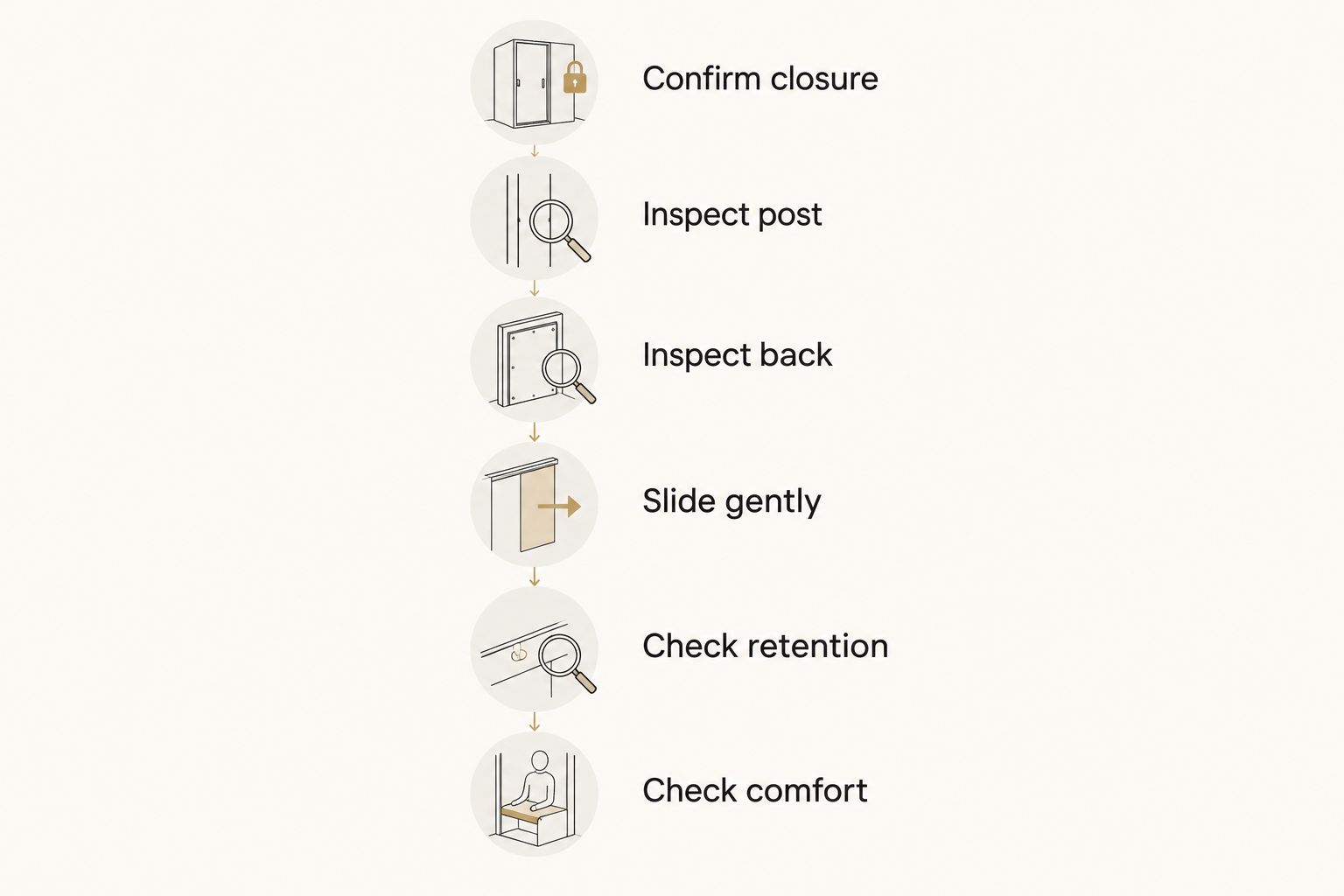
Butterfly backs and screw backs: check the mechanism first
Butterfly backs and screw backs use different retention mechanisms. Neither name tells you whether a particular back fits a particular post, and neither removes the need to inspect the hardware.
Use this comparison when identifying an unfamiliar pair in 2026. It is a closure guide, not a claim about which mechanism any specific product includes.
| Closure | Best for | Useful feature | Limitation | What to check |
|---|---|---|---|---|
| Butterfly friction back | Shoppers who prefer push-on handling | Slides into position without threading | Grip depends on the back fitting the post correctly | Controlled resistance, intact wings, comfortable positioning |
| Screw back | Shoppers who prefer a threaded closure | Engages with matching post threads | Requires matching threads and deliberate turning | Undamaged threads and smooth engagement without force |
Do not interchange these mechanisms. Pushing a screw back over threads or trying to screw a friction back into place is not a valid fit test. Follow the instructions for the actual closure.
Why butterfly-back fit varies
A butterfly back is not a universal replacement just because its opening accepts the post. These physical differences explain why a spare back needs its own inspection:
- Post dimensions: The back's gripping opening must suit the particular post. Visual similarity does not establish compatibility.
- Back condition: Crushed, distorted, or cracked metal needs assessment rather than more force.
- Post condition: A bend or rough area changes how the back travels and can make resistance feel misleading.
- Surface residue: Buildup around the opening or post interferes with a clear inspection. Clean appropriately before judging the fit.
- Lobe clearance: A back pushed tightly against the skin creates pressure even when its grip on the post feels secure.
Resistance and comfort answer different questions. Resistance helps you screen the mechanical fit; comfort helps you judge the position against your ear. Passing one check does not excuse failing the other.
What should you do when a butterfly back feels loose?
Remove the earring and keep the back with it for inspection. Do not rely on pushing a loose back farther along the post; changing its position does not establish reliable grip.
Check whether you accidentally switched backs between pairs. Return to the original pairing only if you can identify it confidently, then repeat the off-ear inspection. If the fit still feels loose, ask a jeweler to assess the post and select a compatible replacement.
Avoid squeezing the wings with pliers as a routine home fix. Changing the back's shape without assessing its condition can damage it or leave the fit uncertain. Replace or professionally assess questionable hardware instead of repeatedly bending it.
How tight should butterfly backs feel behind your ears?
Butterfly backs should retain the earrings without compressing your lobes or causing pain. There is no universal gap measurement that fits every ear, post, and backing design.
Do not use the very end of the post as an arbitrary position, either. A back needs appropriate engagement with its matching post, not simply distance from your skin. If you cannot achieve both retention and comfort, stop wearing that combination and have it checked.
Persistent redness, swelling, discharge, or worsening pain needs medical advice rather than another hardware adjustment. Do not force jewelry through irritated tissue or treat discomfort as proof that a back is secure.
Does a secure back mean the whole stud is ready to wear?
A secure back checks only one connection. Inspect the front separately for visibly bent prongs, a displaced stone, or a setting that catches unexpectedly on fabric. Do not press the stone to test whether it moves.
Keep the gemstone identity separate from the hardware, too. Moissanite is a distinct gemstone, not a lab-grown diamond. Neither the stone name nor a clarity description establishes the backing mechanism, post dimensions, or suitability for your ears.
This separation matters when comparing product descriptions in 2026: stone, setting, metal construction, and closure are different specifications. Ask about any detail the listing does not clearly identify before treating it as a buying criterion.
What should you verify before buying everyday studs?
Lumina Jewelry Co. is for shoppers seeking handmade moissanite stud earrings rather than lab-grown diamonds. For everyday use, verify the closure and fit details alongside the visible design. A clear stone description does not replace a clear hardware description.
For example, Lumina Jewelry Co.'s Princess-Cut Studs are described as hand-set princess-cut moissanite in a four-prong basket, in 925 sterling silver or 18k gold vermeil. Those details identify the stone, setting, and listed metal options; they do not establish that the earrings use butterfly backs. Ask about the closure rather than inferring it from the photograph or setting name.
The practical distinction is useful beyond this pair. Sterling silver marked 925 denotes 92.5% silver, while gold vermeil describes a gold layer over a sterling-silver base—not solid gold construction. Neither material label guarantees comfort for every wearer or compatibility with a spare back.
For a 2026 purchase, ask these questions before choosing:
- What closure does this exact pair use?
- What are the post and backing materials?
- Are replacement backs available that match this post?
- What post dimensions and earring measurements are provided?
- What care instructions apply to the selected metal construction?
Choose clear answers over assumptions. A simple-looking stud still has several separate parts to verify.
FAQ
How do I know if my butterfly earring back is too loose?
A butterfly back that slides along its matching post with almost no resistance needs assessment before wear. Check it off your ear over a towel, and stop using it if the grip remains uncertain.
Should butterfly backs click into place?
A click is not required for every butterfly-back design. Some posts have a retention notch, but assess the actual mechanism, controlled resistance, and condition rather than listening for a universal sound.
Can I use butterfly backs from another pair of earrings?
Do not assume butterfly backs from another pair fit your posts. Ask a jeweler to confirm compatibility if the original back is missing or the replacement's fit is uncertain.
Can I tighten butterfly backs with pliers at home?
Avoid using pliers as a routine home fix for loose butterfly backs. A jeweler can assess whether the back is damaged and whether a replacement matches the post.
Are all Lumina Jewelry Co. moissanite stud earrings fitted with butterfly backs?
Do not assume every Lumina Jewelry Co. moissanite stud earring uses butterfly backs. Confirm the closure for the exact pair; stone and setting descriptions do not establish the backing type.
What should I check before wearing my studs in 2026?
Check each post, back, and setting separately before wearing your studs in 2026. Test the back off your ear first, then confirm that its position does not compress or irritate your lobe.
Does VVS1 clarity tell me whether an earring back is secure?
VVS1 clarity does not establish whether an earring back is secure. Clarity concerns the stone; backing fit requires a separate inspection of the post and closure.
One last thing
Keep each back with the post you checked. When you remove your earrings, place each stud and its matching back together rather than dropping every loose back into one container. That simple habit prevents an inspected pairing from becoming an unidentified mix at the next wear.
If one earring fails the check, set that earring aside. The other back feeling secure does not clear the pair, and a successful home inspection does not guarantee against loss.