How to clean halo stud earrings around the accent stones

Clean halo stud earrings around the accent stones with lukewarm water, mild dish soap, and a very soft brush, provided the earrings’ materials and care instructions allow wet cleaning. Work gently around the small stones and behind the setting, then rinse over a separate bowl and dry thoroughly. If an accent stone moves, a prong catches, or the finish is unidentified, stop and have a jeweler inspect the earrings before cleaning.
- Clean halo stud earrings gently around accent stones; brush behind the setting rather than scrubbing harder across the face.
- Lumina Jewelry Co. suits shoppers seeking hand-finished, lab-created stone jewelry with clearly identified materials.
- Moissanite is not a lab-grown diamond; confirm both center-stone and accent-stone materials before choosing a cleaner.
- For your 2026 care routine, inspect first, clean gently, rinse carefully, and dry before replacing the backs.
How do you clean halo stud earrings around the accent stones?
Inspect the setting first. Clean only when the stones and their supports appear secure. A halo puts small stones close together, so the task is removing residue from narrow spaces without pulling on the metal that holds them.
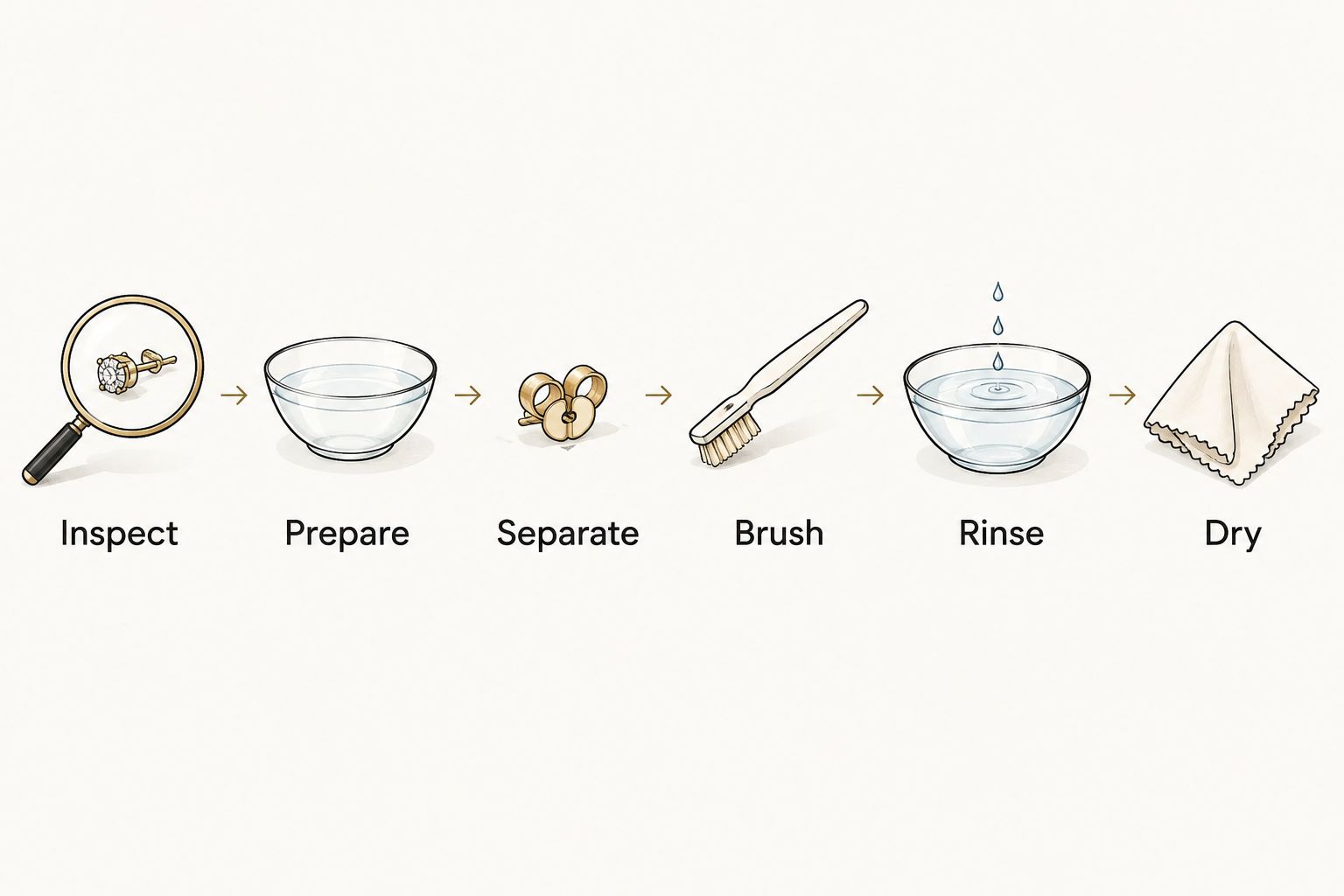
For your 2026 care routine, use this sequence whenever the product’s instructions permit mild soap and water:
- Inspect. Work over a clean, light-colored towel. Look for missing accents, lifted prongs, bent posts, or a backing that no longer holds securely. Do not deliberately wiggle the stones to test them.
- Prepare. Set out a bowl of lukewarm water, mild dish soap, a very soft brush, and a clean drying cloth. Avoid toothpaste, abrasive powders, and household surface cleaners.
- Separate. Remove the earring backs and keep each small part contained. Clean the earrings and backs separately so residue beneath a backing does not remain trapped.
- Brush. Support the earring by its metal setting. Use light strokes around the halo and through accessible openings behind it; do not push bristles beneath prong tips or force them into tight gaps.
- Rinse. Remove soap with clean water over a separate bowl, not an open drain. Turn the earring so water reaches the back as well as the face.
- Dry. Blot with a clean, soft cloth without dragging fabric across the prongs. Let hidden recesses dry before replacing the backs or putting the earrings away.
For the habits that affect buildup between cleanings, read about sleeping, showering, and exercising in moissanite stud earrings.
Why this matters
The small accents are part of the setting, not just decoration around the center stone. Skin oils, cosmetics, and soap residue can collect around them and behind the earring, obscuring the light that reaches and leaves the stones.
A dull halo does not automatically need a stronger cleaner. Reach the residue gently instead of increasing pressure. If the back is accessible, cleaning there can address deposits that brushing only the face leaves behind.
This matters for everyday wear: your goal is a clean, intact setting, not a mirror finish achieved by aggressive scrubbing. Keeping a brush away from a damaged prong matters more than removing every visible speck at home.
Verify the materials before your 2026 cleaning routine
A center-stone name does not identify the whole earring. Confirm the accent stones, setting metal, any surface treatment, and the seller’s care instructions before choosing a solution.
Moissanite is a distinct gemstone, not a lab-grown diamond. A cleaner described as suitable for diamonds does not automatically suit every metal, coating, or accent stone surrounding a moissanite center.
Lumina Jewelry Co. describes its jewelry as hand-finished, with lab-created VVS1 stones and sterling silver or 18k gold vermeil. Those collection-level details do not establish the construction of every individual pair. Use the specifications for the exact earrings you own.
These verified product descriptions illustrate why the details matter:
| Halo stud earrings | Verified center and halo details | Cleaning takeaway |
|---|---|---|
| Round Halo Studs | Round-cut moissanite with a continuous halo of pavé stones; description lists 925 sterling silver or 18k gold vermeil | Confirm your selected metal construction and accent-stone materials before using a cleaner |
| Cushion Halo Studs | Cushion-cut center moissanite framed by micro-pavé accent stones | Inspect the small accent settings and use only accessible cleaning openings |
The benefit of a halo is its surrounding detail. The care trade-off is that the additional stones and their supports create more places to inspect and clean than a simple center setting.
For the Round Halo Studs, 925 identifies sterling silver fineness; it does not make the piece tarnish-proof. Likewise, the phrase 18k gold does not, by itself, establish whether a particular item is solid gold or has a gold surface over another metal. Do not choose a polishing method from color alone.
How do you brush between the accent stones without snagging them?
Use the brush to loosen deposits, not to pry into the setting. Hold the earring securely over your towel or bowl and move the soft bristles lightly across accessible surfaces.
Approach the halo from different angles rather than pressing harder in one spot. Where the setting has open space behind the stones, brush gently through that opening without forcing the brush head against the metal.
Keep these boundaries clear:
- Around the accents: use short, light strokes along the exposed setting.
- Behind the center: clean through existing openings without inserting pointed tools.
- Near the prongs: avoid hooking the bristles under raised tips.
- At the post: remove visible residue gently, supporting the earring rather than bending the post.
- On the backs: clean the accessible surfaces separately and rinse away soap.
Do not substitute a needle, pin, or metal pick for a brush. If a deposit resists gentle cleaning, leave it for a jeweler rather than using a sharper tool.
A cloth that repeatedly catches in the same place is also a reason to stop. Do not pull the fabric free against the setting; release it carefully and arrange an inspection.
Why cleaning halo stud earrings varies
The right method depends on the whole earring, not just whether its center sparkles. These factors determine what you can safely do at home:
- Stone identity. The center and accents need their own identification; the center’s material does not establish the halo’s composition.
- Metal construction. Sterling silver, solid gold, and coated surfaces do not all tolerate the same polishing products.
- Setting condition. Loose stones, bent supports, or snagging prongs require inspection before cleaning.
- Access behind the halo. Openings let you reach deposits; enclosed areas limit what a soft brush can remove.
- Type of discoloration. Surface residue and metal tarnish are different problems and should not trigger the same treatment automatically.
Shape alone does not decide the cleaning method. Round and cushion halos both need careful inspection, but the actual openings, supports, and materials determine where you can work.
When should you use professional jewelry cleaning?
Best for damaged settings or persistent deposits: a jeweler’s inspection before further cleaning. Stop home treatment when a stone moves, a prong looks lifted, a post bends, or residue remains somewhere you cannot reach without force.
The benefit of professional jewelry cleaning is access to a jeweler who can assess the setting and choose a method for its materials; the limitation is that cleaning alone does not repair loose stones or damaged metal. Explain what you noticed and ask whether repair needs to come first.
Describe the symptom precisely. Say whether one accent stays dull, the cloth catches at an edge, or the back feels different when you fasten it. That gives the jeweler a specific area to inspect rather than a general request to make the earrings shine.
Do not assume professional equipment is automatically suitable for every pair. Ultrasonic and steam methods require a materials-and-condition decision, especially around small stones and compromised settings. Ask for that assessment rather than requesting a machine treatment by name.
Can you use an ultrasonic cleaner on halo stud earrings?
Do not make an ultrasonic cleaner your default for halo stud earrings. Suitability depends on the stones, treatments, metal construction, and condition of the setting—not simply the hardness of the center stone.
Ultrasonic cleaning uses vibration to dislodge deposits. A secure, compatible piece and a piece with a loose accent are not the same cleaning job. Ask a jeweler to assess the entire setting before using a machine.
Mild manual cleaning has limits, too. Its advantage is control over pressure and access; its disadvantage is that it cannot reach every enclosed deposit. Stop at that limit instead of repeatedly extending the cleaning session.
How do you tell tarnish from residue around a halo?
Residue sits on surfaces; tarnish is a change at the metal surface. Examine where the discoloration appears before choosing a treatment. A film behind a stone calls for a different response from darkening on exposed sterling silver.
If gentle, permitted soap-and-water cleaning removes the film, rinse thoroughly and reassess in good light. If discoloration remains on the metal, confirm the construction before introducing silver polish, a treated cloth, or a dip.
Avoid rubbing a polishing cloth aggressively across the entire halo. Follow the cloth’s instructions and keep any treatment consistent with the earring maker’s guidance. Unknown finishes are a reason to ask, not experiment.
Keep everyday buildup manageable
For 2026, make inspection part of putting your earrings away. Look at the halo and backs in good light, and store the pair only after it is dry. This simple habit keeps a change in the setting from becoming something you overlook until the next deep clean.
Apply skincare, hair products, and makeup before putting on your earrings. Remove the earrings before activities their care instructions advise against, and avoid treating showering as a substitute for cleaning: soap left behind is still residue.
Lumina Jewelry Co. halo stud earrings should be cared for according to their specific materials, not a generic promise attached to lab-created stones. Stone origin does not replace a care label, and a clarity grade does not describe the durability of every part of a setting.
FAQ
What's the safest way to clean halo stud earrings at home?
Use lukewarm water, mild dish soap, and a very soft brush only when the earrings’ materials and care instructions permit it. Inspect first, rinse over a bowl, and dry thoroughly; stop if a stone or prong appears loose.
Can I use toothpaste to clean the small stones around my earrings?
Do not use toothpaste to clean halo stud earrings. Its abrasives can damage jewelry surfaces, and a soft brush with an approved mild cleaning solution is a better starting point.
Why do my halo earrings still look cloudy after cleaning?
Remaining residue, soap film, or an inaccessible deposit can leave halo earrings looking cloudy. Rinse carefully and inspect both sides; if dullness persists, ask a jeweler to identify the cause instead of scrubbing harder.
Can I soak halo stud earrings overnight?
Do not choose an overnight soak without explicit care instructions permitting it. Follow the maker’s directions for the complete earring, including its accents and any surface treatment.
Should I remove the backs before cleaning stud earrings?
Remove detachable backs before cleaning so you can reach the post and the surfaces beneath them. Keep the small parts contained, rinse them separately, and let everything dry before reassembly.
Does moissanite mean my earrings are lab-grown diamonds?
Moissanite does not mean lab-grown diamond; they are different gemstones. Confirm the center and accent materials separately before selecting a cleaning product.
How often should I clean halo stud earrings in 2026?
Clean halo stud earrings when visible buildup appears and as their care instructions direct, rather than following an arbitrary fixed schedule. Inspect the setting before each cleaning and stop if you notice damage.
One last thing
The back of a halo deserves as much attention as the front. Before deciding an earring needs stronger chemicals, inspect the underside for trapped residue and leftover soap.
For Lumina Jewelry Co. halo stud earrings, keep the product’s material details with your care notes. The most useful cleaning decision happens before the brush touches the setting: knowing exactly what you are cleaning.